

There’s a moment every household knows. Someone stays in the shower a little too long, and the next person steps into water that goes from lukewarm to cold in about thirty seconds. With a traditional tank, hot water is a limited supply. Once it’s gone, you wait.
That frustration is why so many Southern California homeowners are asking about the benefits of a tankless water heater. A tank stores and reheats 40 or 50 gallons around the clock. A tankless unit heats water only when you turn on the tap. The result is hot water that keeps going, lower energy use and a system that can outlast a traditional tank by years.
The main benefits of a tankless water heater are endless hot water, up to 34% better energy efficiency, a lifespan of about 20 years, space savings and no tank to burst.
A tankless water heater isn’t the right fit for every home, though, and the upfront cost is real. This guide covers what you gain, what to plan for and how to tell whether the switch makes sense for your household.
What Makes a Tankless Water Heater Different
A tankless water heater, also called an on-demand water heater, heats water as it flows through the unit instead of keeping a full tank hot all day. When you open a hot water tap, cold water travels into the unit, a gas burner or electric element fires up and the water comes out hot. Close the tap and the unit shuts off.
A traditional tank works the opposite way. It keeps a large volume of water heated 24 hours a day, even at 3 a.m. when nobody’s using it. The energy lost keeping that water warm is called standby loss. Standby loss is the main reason tankless systems use less energy.
Tankless units are sized by flow rate, measured in gallons per minute (GPM), not by tank capacity. That detail matters when choosing the right unit, and we’ll come back to it below.
6 Benefits of a Tankless Water Heater
1. Hot Water That Doesn’t Run Out
Back-to-back showers, a load of laundry and a running dishwasher can drain a tank fast. A tankless unit heats water as you need it, so the last person in line gets the same hot shower as the first. For families with busy mornings, this is usually the first benefit they notice.
2. Lower Energy Bills
No tank means no standby loss. According to the U.S. Department of Energy, homes that use 41 gallons or less of hot water per day can see tankless units run 24% to 34% more efficiently than conventional tanks. Homes that use a lot of hot water, around 86 gallons a day, still come out 8% to 14% ahead. ENERGY STAR estimates a certified gas tankless model saves a family of four about $95 a year on gas bills compared to a standard gas tank. That adds up to roughly $1,800 over the unit’s lifetime.
3. A Much Longer Lifespan
Most traditional tanks need replacing around the 10 to 12 year mark. ENERGY STAR puts the life expectancy of a tankless unit at about 20 years. That means fewer replacements while you own your home and fewer surprise cold showers when an aging tank gives out. If your current tank is nearing that age, it’s worth weighing water heater repair vs. replacement before it fails on its own schedule.
4. More Space in Your Home
Tankless units are compact and mount on a wall. Many are built for outdoor installation, which works well in Southern California’s mild climate. Swapping a 50-gallon tank for a wall-mounted unit can free up a garage corner, a closet or a utility area.
5. No Tank to Burst
When a traditional tank fails, it can release dozens of gallons of water into your garage, closet or living space. A tankless system doesn’t hold a reservoir of water, so the risk of that kind of sudden flood drops dramatically. Water damage often stays out of sight until it’s serious, as anyone who has dealt with a hidden leak can tell you. Removing one of your home’s biggest water sources lowers that risk.
6. A Good Match for the SoCal Climate
A tankless unit’s job is to raise incoming water to your set temperature. The colder the incoming water, the harder the unit has to work. In Southern California, water coming into the home is rarely as cold as it is in northern states. That means a properly sized unit can deliver strong flow without straining. Add year-round outdoor installation options and SoCal homes are well suited for the switch.
What to Plan For Before Making the Switch
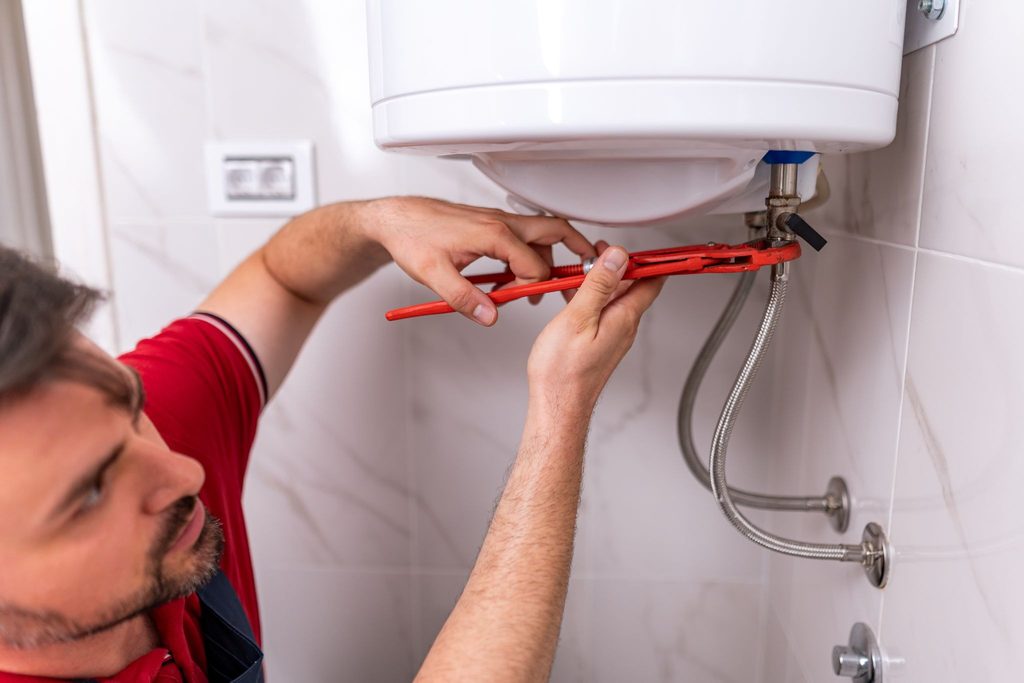
Every upgrade comes with trade-offs. Knowing them upfront keeps the project on budget and free of surprises.
Higher upfront cost. Tankless units cost more to buy and install than a standard tank. The longer lifespan and lower energy use help close the gap over time, but the payback isn’t overnight.
Gas line and venting upgrades. A gas tankless unit uses a more powerful burner than a tank. Many homes need a larger gas line or new venting to support it, so have a licensed plumber evaluate your gas line before installation.
Proper sizing. Think about how many fixtures run at once during your busiest time of day. An undersized unit can struggle when the shower, dishwasher and washing machine all run together. Most homes need a unit rated for 5 to 8 GPM, depending on how many fixtures run at the same time.
Annual descaling. Much of Southern California has hard water, and minerals can build up inside a tankless unit’s heat exchanger. A yearly flush keeps it efficient, just like the annual water heater flush recommended for tanks. Homes with a water filtration system often see less buildup.
Is a Tankless Water Heater Worth It for Your Home?
For many households the answer is yes. The right choice depends on your home, your hot water habits and how long you plan to stay.
A tankless water heater is likely worth it if:
- Your current tank is 10 or more years old or showing signs of failure
- Your household regularly runs out of hot water
- You plan to stay in your home for several more years
- You’d like to reclaim floor space in a garage or closet
- Your home already has natural gas service
It may not be the best fit if:
- You’re planning to sell in the next year or two
- Your current tank is newer and working well
- Your home would need extensive gas line or electrical upgrades that stretch your budget
See how our tankless water heater installation works.
A quick note on incentives in 2026. Many articles online still mention a federal tax credit for tankless water heaters. That credit ended for equipment installed after December 31, 2025, so 2026 installations don’t qualify. Local incentives are still available. SoCalGas offers rebates on qualifying ENERGY STAR certified gas tankless units that replace a traditional tank, with funds available first come, first served through the end of 2026. Rapid Plumbing also offers 18-month, no-interest financing to help spread out the upfront cost.
Frequently Asked Questions
Will a tankless water heater work during a power outage?
Most won’t. Even gas-powered tankless units rely on electricity for ignition, controls and the exhaust fan. If outages are a concern where you live, bring it up during your consultation so your plumber can walk you through options.
Why does my water sometimes turn cool for a second with a tankless system?
This is often called a “cold water sandwich.” If you turn the hot water off and back on quickly, some unheated water can slip through while the unit fires back up. It’s normal and passes in a few seconds.
Can I switch from an electric tank to a gas tankless water heater?
Often, yes, as long as your home has natural gas service. The switch usually means running a gas line to the unit’s location and adding venting, which adds to the project cost.
How long does tankless water heater installation take?
A straightforward replacement is often finished in a day. Installations that need a new gas line, upgraded venting or electrical work can take longer.
Enjoy Hot Water Without the Wait
The benefits of a tankless water heater add up to a simple idea: hot water when you need it, less energy wasted when you don’t and a system built to last. For households tired of cold showers and rising energy bills, it’s one of the most practical upgrades you can make.
Rapid Plumbing has been installing and repairing water heaters across Southern California since 1987. Our free visual inspection gives you an honest picture of whether a tankless system is the right fit and exactly what your home needs to support one.
Ready to see if the switch makes sense for your home? Schedule a free visual inspection or call us at (877) 203-0895.